




|
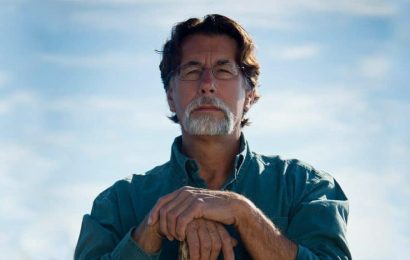
Law and Order Consumer advocate Mark Peters hopes to turn the District Attorney's office around, but he's got to win election first. Charles Star | Issue #24 Brooklyn District Attorney Charles "Joe" Hynes has held his office since 1989 without facing a serious challenge, but Park Slope's Mark G. Peters is ready to take him on. Peters, currently in private practice, spent six years in the Attorney General's office under Eliot Spitzer as the Deputy Chief of the Civil Rights Bureau and as the Chief Corruption Prosecutor. He has also served as the President of Brooklyn Community School Board 15, a sprawling district stretching from Park Slope to Sunset Park and from Kensington to Cobble Hill. Six people have stepped up to challenge Hynes for the Democratic nomination, but only Mark Peters had the good sense and intelligence to ask us for an interview. Stay Free! talked to Peters in his office at the Manhattan law firm of Scarola, Reavis & Parent. --Charles Star STAY FREE!: You have a history of going after predatory lenders. What defines a predatory loan and why is that a big issue in Brooklyn? MARK G. PETERS: A predatory loan is a loan that somebody doesn't really need, one that does them more harm than good. Someone rings your doorbell and says, "Wouldn't you like some money to go on vacation?" "Wouldn't you like to fix your roof?"--even though your roof doesn't really need to be fixed. Then they give you a 13 or 14 percent interest loan and you wind up with your house at stake. STAY FREE!: But where do you draw the line between this kind of usury and legitimate lending? PETERS: There are two definitions of usury. There's the technical legal definition, which in the State of New York means a loan 25 percent or higher. Then there's the moral definition. Given where interest rates are generally, promoting loans at 13 and 14 percent to people who are not bad credit risks, who don't have a history of bankruptcy, simply because they are poor or black or elderly may not be legal usury, but it certainly is moral usury. The purpose of predatory lending litigation is to get the people who are doing what is obviously morally wrong and, with a creative team of lawyers, we were able to prove it was legally wrong as well. STAY FREE!: How prevalent is it in Brooklyn? PETERS: Let me put it this way. One of the largest predatory lenders we put out of the business was doing a quarter of a billion dollars a year in predatory loans. STAY FREE!: Statewide? PETERS: Yes. But Brooklyn has become a real epicenter for predatory lending. We're talking millions and millions of dollars a year. STAY FREE!: You did that under the auspices of the Attorney General. Is there a similar role for the District Attorney? PETERS: Absolutely. In fact, when I was in the A.G.'s office, we were never able to get the people behind the scenes, the ones ringing doorbells. That's a fraud that needs to be prosecuted criminally by the D.A. We tried to work with the Brooklyn D.A., but that office was simply incapable of doing sophisticated prosecution investigation. Part of the reason I'm running for D.A. is to convert that office from a political office into a professional prosecutor's office that can do those kinds of fraud prosecutions. STAY FREE!: What about the current office's capacity keeps them from doing that? PETERS: The Brooklyn District Attorney's Office, with some exceptions, has become a very political shop. The District Attorney in Brooklyn, Joe Hynes, is more interested in hiring his cronies than he is in hiring competent prosecutors. STAY FREE!: Predatory lending is one instance in which the poor pay more for services than other people. Are there other parallel situations? Check cashing comes to mind. PETERS: When I was with Eliot, one of our cases involved Citibank, which was in charge of handing out Temporary Aid for Needy Families benefits. Recipients get a card like an ATM card, which they can put it in any Citibank machine to get their benefits. Unfortuantely, Citibank didn't have any machines where TANF recipients were living and so people were having to go to any number of places, including check cashers, and paying a fee. We forced Citibank to put ATM machines in poor neighborhoods where the TANF recipients were living. But to give you some other issues relevant to the D.A.'s campaign, right now in Brooklyn people pay an average of several thousand dollars more a year for car insurance than people do anywhere else in the City of New York. And the reason is that, unlike other D.A.'s, Joe Hynes cannot successfully prosecute auto insurance fraud rings. STAY FREE!: Do you think it's strictly "can't" or more of an unwillingness? PETERS: That's always a hard distinction to make. To give you an example, about three years ago, Joe Hynes rescinded offers to his entire incoming class of 52 new Assistant D.A.'s. At the same time, he hired Howie Golden, one of his political cronies, for a package that came to about $300,000. So, while he's spending $300,000 of our money on a politcal hire, he's rescinding offers to the people who are supposed to be prosecuting crime because he doesn't have any money in the budget. STAY FREE!: Back to auto insurance: what's the nature of the fraud? PETERS: Organized crime operations set up staged accidents. They bang the headlights of a car out, crash it, then everybody goes to a "doc in the box" operation, where they're diagnosed with whiplash or some other ailment. They all put in for X-thousand dollars in insurance, keep a small piece of it, and give the bulk of the cut to the folks running these operations. And you can do this thousands of times a year. STAY FREE!: I'd always thought that the reason the rates were so high in Brooklyn and Queens had to do with theft. PETERS: No. Is theft part of it? Sure. But the major driving force is auto insurance fraud. STAY FREE!: Are there other examples of serious consumer disadvantage for the poor in Brooklyn that you could address? Redlining is another one that comes to mind. PETERS: There's been a lot of legislation to prevent redlining. Redlining is a serious issue. Part of the reason that Eliot was able to turn the attorney general's office around is that he made creative use of the laws. For example, the lending industry is a highly regulated industry which means people file large numbers of forms with the government. People who are engaging in redlining often end up filing false forms, and filing false forms is a felony. I'm prepared to go after those people committing those felonies. STAY FREE!: How do changes taking place at the federal level--the war on terrorism, for instance--affect the local prosecutor's office? PETERS: Suddenly a lot of things that the feds used to prosecute they're not prosecuting anymore because such a huge amount of their resources are going to dealing with terrorism. A lot of cases that used to be prosecuted by the federal government are now being prosecuted by the state. So the things that a local district attorney has to prosecute now are expanded and much more sophisticated. For instance, financial crimes. As Eliot Spitzer demonstrated, it is no longer the sole province of the federal government to deal with crimes on Wall Street and crimes with insurance companies. STAY FREE!: What sort of things can the Brooklyn D.A.'s office do? PETERS: Many of the same things. There are 2.3 million people in Brooklyn, quite a few of them investing on Wall Street, and quite a few of them receiving dishonest prospectuses into their homes in Brooklyn. And those are all things that a District Attorney can and needs to think about. |