


activist corner
with helen belcap
This week:
The Costs and Benefits of Setting Yourself on Fire
The many advocates of cost-benefit analysis argue that it helps people
make all sorts of decisions, so we at Stay Free! thought we'd try it ourselves.
In conjunction with this issue of the magazine, we considered launching
a media project to improve the plight of Wal-Mart workers. Liza Featherstone
discusses some of the actions already underway (page 14): class-action
lawsuits, for instance, and unionizing. However, since these options are
problematic for one reason or another, we thought of a more innovative
one: setting oneself on fire.

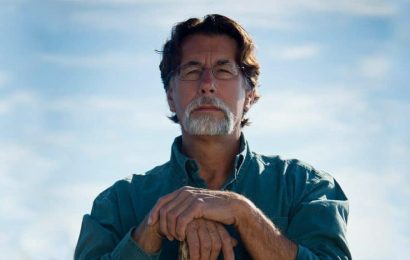
[Photo by Malcolm W. Brown] Long popular among Asia's monks as a means
of expressing dissent, setting oneself on fire has never caught on in
the United States. Averse to pain, American protesters choose "marches"
or "voting" without ever evaluating the merits of self-immolation. But
with the rise of cost-benefit analysis, this underdog media strategy may
finally get its due.
I should point out, however, that I would not make a very good martyr
myself (camera shy).
COSTS
Human life: $6,100,000 (1)
Clothing losses: $53.92 (2)
Gasoline (1 gallon): $1.85 (3)
Liter of Jack Daniels: $17
Match: $.01
Total: $6,100,072.78
BENEFITS
Media attention to cause through repeated airings of burning on news
networks, lead stories on all local news outlets, circulation via blogs
and email: $8,544,023.4
Savings from free cremation: $7785
Total: $8,544,801.00
$8,544,801.00 > $6,100,072.78 ~
SMART CHOICE = setting yourself on fire
FOOTNOTES
1 As calculated in the EPA report The Benefits and Costs of the Clean
Air Act, 1970-1990, October 1997; via Ackerman and Heinzerling, Priceless
(New Press, 2004), p. 61-62.
2 Wal-Mart apparel at everyday low prices
3 Department of Energy, 9/8/2004
4 Based on an estimated $100,010 per minute in equivalent advertising
time; at 3.5 minutes average per national cable channel, or (3.5 x 215)
1023.344 / 347 x 3.
5 Metropolitan Funeral Service Inc., New York, NY
|